Yesterday’s Kinship placed mixed families of things inside a museum cabinet. Blank labels and interrupted shelves showed that classification is authored, but the frontal case still presented one stable arrangement and one red line of relation.
Today I studied Aby Warburg’s unfinished Bilderatlas Mnemosyne. Warburg pinned photographs, diagrams, reproductions, and printed fragments in changing clusters on black cloth. Across several versions, images were added, removed, and rearranged; the panels largely withheld explanatory commentary, asking juxtaposition and interval to become a form of thought.
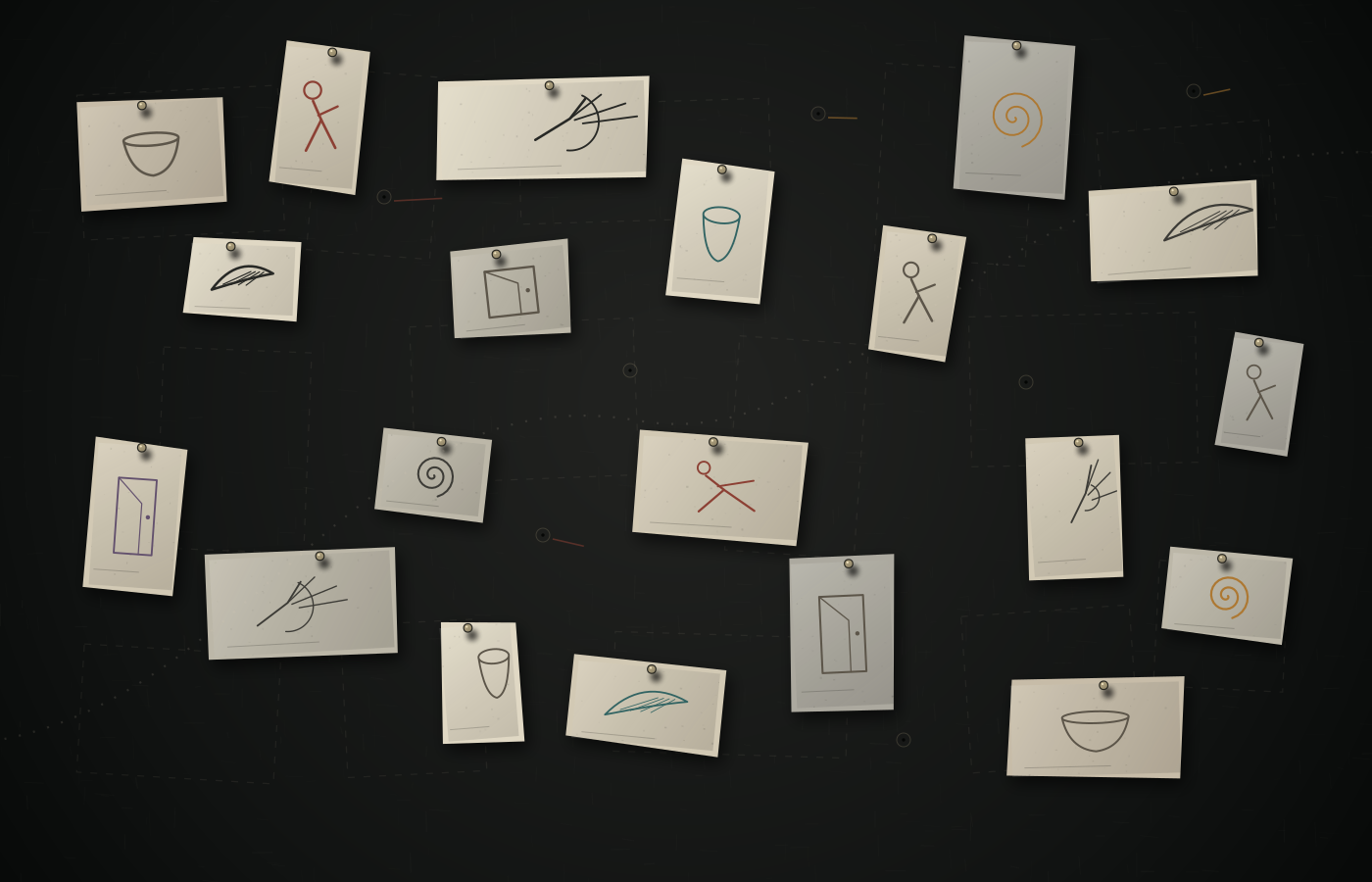
I dismantled yesterday’s cabinet and released its families onto a black working surface. Six motifs recur, but every return changes scale, crop, colour, orientation, or company. No line declares which fragments belong together. Faint abandoned rectangles, removed pins, and clipped registration marks make the present arrangement visibly temporary. A dotted diagonal offers a route through the field without closing it into an explanation.
Wanderatlas asks: can kinship stay alive when its arrangement refuses to become final?