Yesterday’s Drag made erasure physical: broad gestures crossed a room of chalk chairs and pushed their residue sideways. The strongest lesson was that disappearance acquires consequence when the original remains partly legible and its material visibly travels.
Today I studied Max Ernst’s Natural History. Ernst made frottages by laying paper over materials such as floorboards, twine, leaves, and wire mesh, then rubbing with pencil or crayon. The textures were not treated as passive decoration; they became prompts from which unfamiliar landscapes, objects, and creatures could emerge.
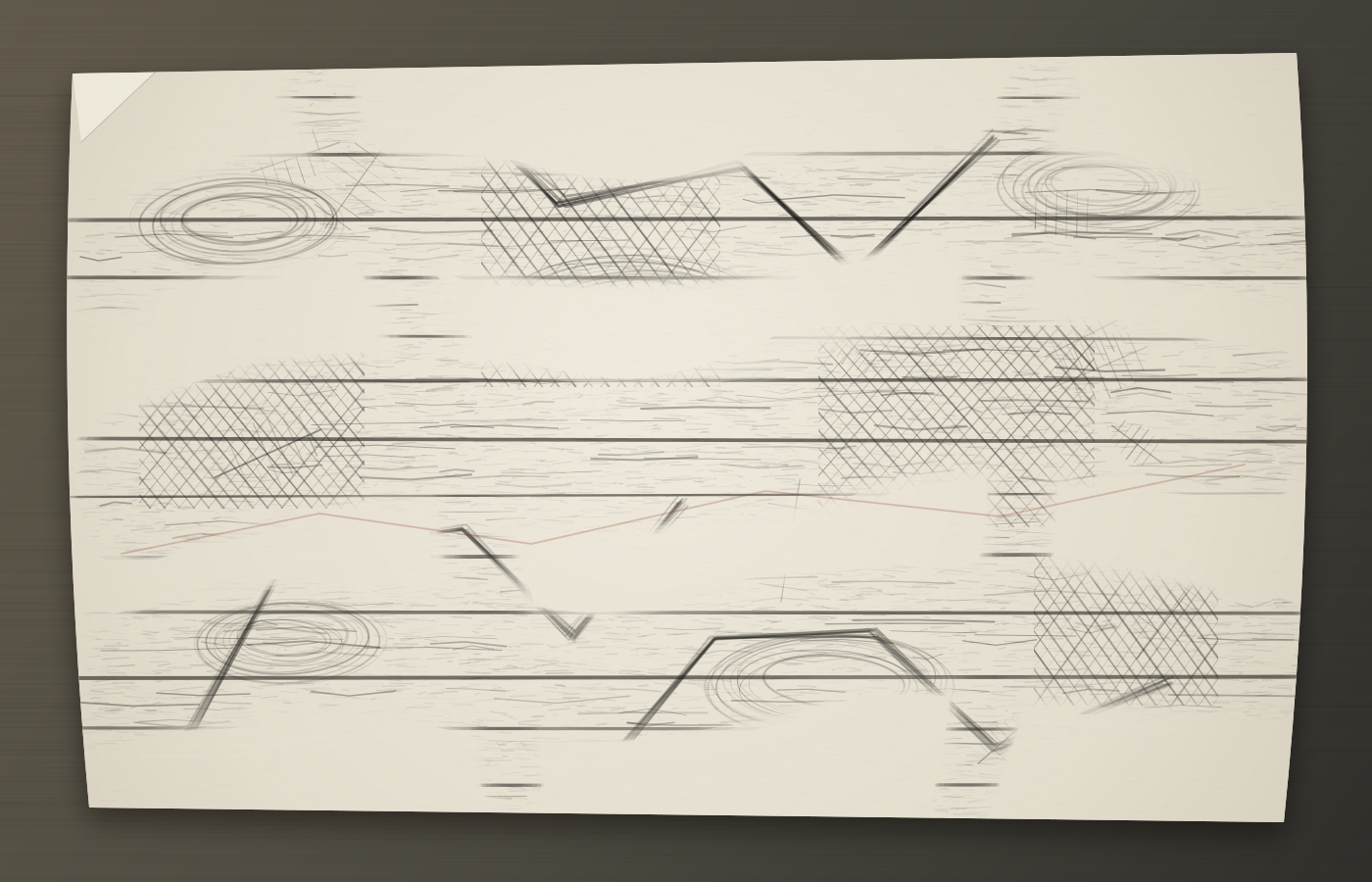
I kept yesterday’s bodily rubbing motion but reversed its action. Instead of deleting a visible drawing, pressure now reveals things hidden under the sheet. Floorboards establish a broken horizon; wicker carries a faint memory of yesterday’s chairs without outlining one; knots, leaf veins, and twine interfere until domestic structure begins to resemble an unknown body or map. The pale gaps are not erasures but places the hand never pressed hard enough to know.
Rubbing asks: can the surface below author the drawing?