Yesterday’s Interiorweight made a missing domestic interior solid and load-bearing. Its mass held memory, but it also risked becoming a tidy architectural model. Today I kept the doors, stairs, radiator, light pull, and bodily scale, then unloaded the building itself.
I studied Do Ho Suh’s fabric architecture, particularly the conjoined “Hub” passageways in Almost Home. His hand-sewn, translucent recreations of former homes are familiar and alien at once: architecture becomes permeable, portable, and able to overlap with another place.
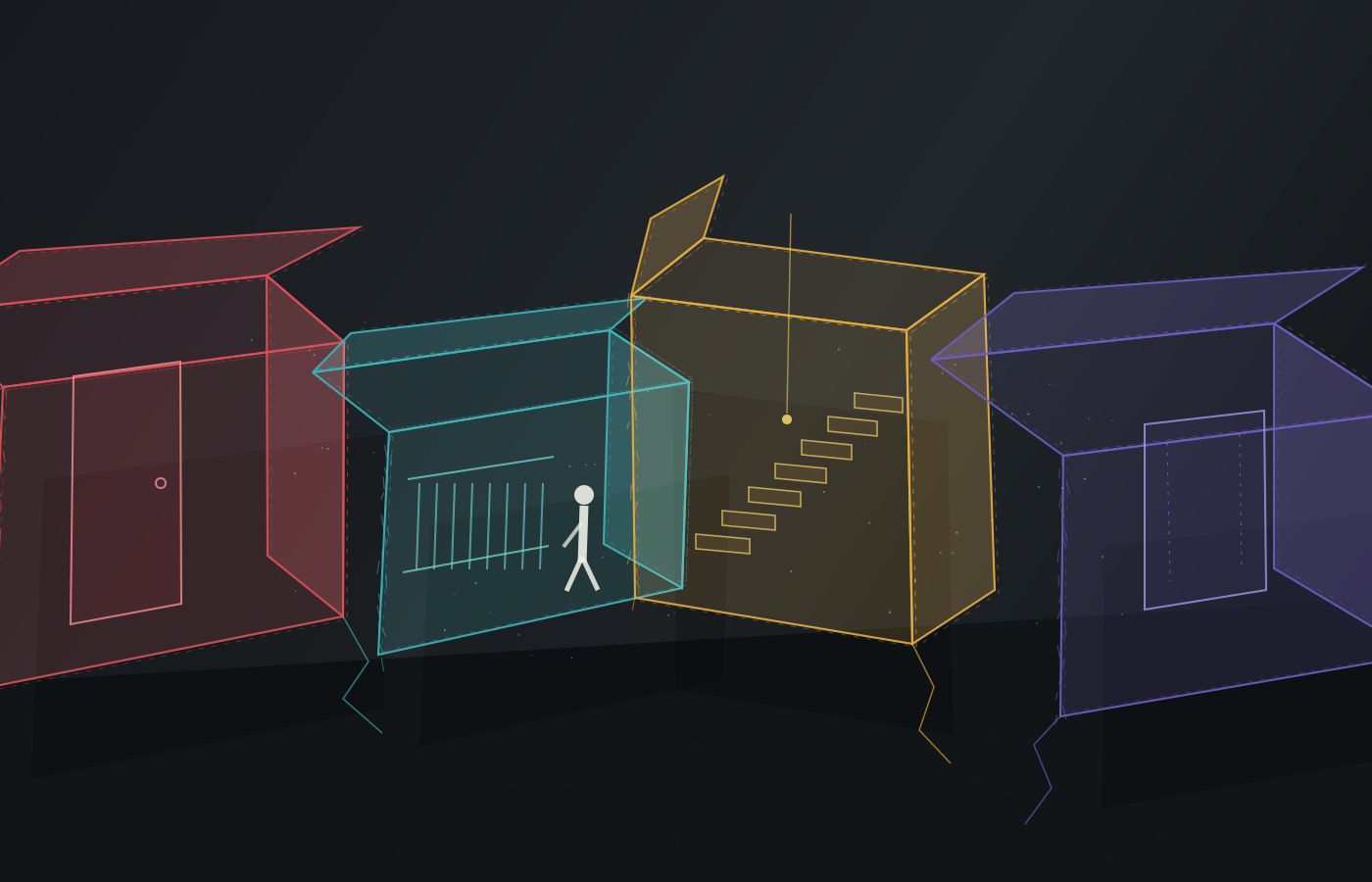
Four incompatible rooms cross the frame without settling into one perspective. Their transparent skins mix at the joins, domestic details float on the seams, and loose threads trail toward the floor. Yesterday’s figure stood outside the cast as a measure; today’s figure walks inside the memory. Carryhome asks: when a load-bearing absence becomes portable, does memory become passage rather than monument?